


Slab leaks and foundation-related pipe issues can cause a variety of problems for your McKinney, Texas home. They can lead to increased water bills, water damage, and unhealthy conditions. In this blog post, we’ll discuss slab leaks and foundation-related pipe issues, as well as what you can do if you believe you have one.
Common Slab Leak Causes
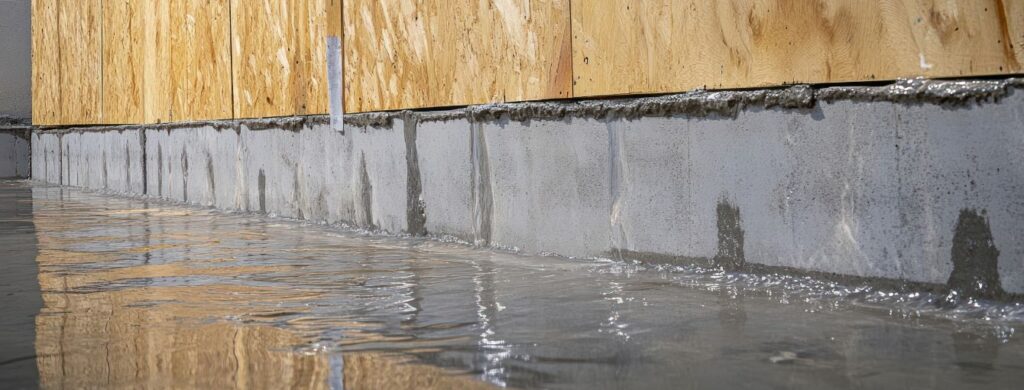
There are several common causes of slab leaks. Many plumbers in the McKinney area, such as our team at Bewley Plumbing, are familiar with these problems and are equipped to handle them.
The following are a few examples:
Shifting Soil
Shifting soil can lead to slab leaks. The most common soil in McKinney, Texas, is Houston Black soil, aka Black Gumbo. Because Houston Black soil tends to swell and shrink, it can damage the foundations of homes, particularly older or rapidly built ones.
Weather Conditions
The extreme weather Texans sometimes encounter, such as heat and droughts, as well as heavy rain and flooding, can contribute to issues with slab and foundation leaks.
Pipe Corrosion or Blockage
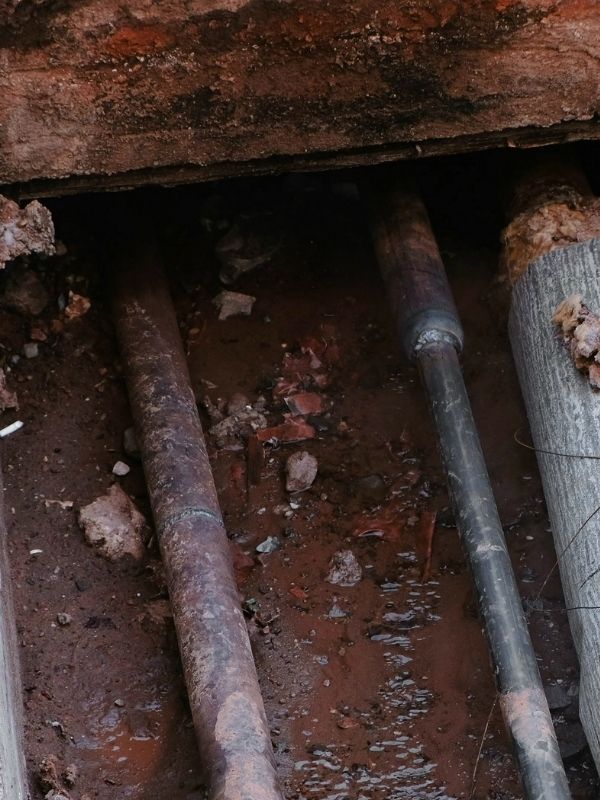
Pipe corrosion or blockage can lead to slab leaks. Older homes often have galvanized or cast-iron pipes that can clog or become blocked as they age.
Damage During Construction
A pipe may be damaged during the construction process, making it more prone to leaking.
Potential Signs of a Slab Leak
There are signs you can look for that may indicate a slab leak. Please note that these signs may not necessarily indicate slab leaks or foundation-related pipe issues. They can also result from other issues.
Unexpected Water Bill Increase
An unexpected increase in your water bill can indicate a slab leak. However, it can also indicate numerous other issues. You’ll want to keep track of your water bill and compare it to your previous month’s bills. Check for significant water use increases that do not match changes in water usage, such as additional people staying in your house, or a swimming pool being filled up.
If you see a gradual increase in water usage over a period of time, it may be due to a small leak, while a drastic increase may suggest a large rupture. You’ll want to rule out other issues before assuming it is due to a slab leak.
- Other leaks or wasted water: Look for faucets that are dripping, leaks from other pipes, or running toilets.
- Water usage changes: Note any changes in water usage, such as new appliances.
- Seasonal changes: Water usage can vary by season. During the summer months, water usage may increase due to lawn watering and higher shower usage.
If you aren’t experiencing any of these issues, a slab or foundation leak may be the culprit.
Running Water Noises When Taps are Closed
A running water sound when all taps are closed can indicate a slab leak. This sound may be similar to a soft woosh noise or a subtle hiss and is created by water escaping from a pressurized pipe and into the foundation or soil. Please note that a hissing sound may also indicate a gas leak.
It’s important to determine what exactly you hear, as a running water sound could be due to a water-using appliance such as a washing machine, open tap, or dishwasher. Listen for running water in places near water lines, particularly where those water lines approach or enter a foundation.
Investigating the Source of the Noise
After you’ve heard the noise, you’ll want to make sure you aren’t hearing sounds unrelated to a slab leak.
- Inspect all your faucets: Make sure no faucets are dripping or leaking, as this may cause misleading echo noises in pipes.
- Check all toilets: A toilet that runs may make a similar sound to a slab leak. Look to see if the toilet stops running once it has filled up.
- Watch the water meter: When all water sources have been turned off, check the water meter. If the meter is moving with all water sources turned off, it can be a sign of a leak.
Your Floor has Warm Spots.
A warm spot on the floor can indicate a leak. This can occur when a hot water line beneath a slab leaks, leading heat to rise upward.
Finding Warm Spots by Touch
To find warm spots by touch, you can try walking barefoot around your floors, especially in places where hot water pipes tend to be. These places may be paths between a water heater and kitchens or bathrooms.
Finding Warm Spots with an Infrared Thermometer
If you have access to one, an infrared thermometer can help you accurately find warm spots on your floor.
Investigating Warm Spots Further
If you come across warm spots on your floor, you can investigate further by doing the following:
- Inspect your water heater and connections: Check for leaks coming from the water heater and the lines that connect to the plumbing system.
- Monitor your water meter: Watch your water meter when your home’s taps are closed. If the meter moves, there may be a leak.
- Hire a slab leak detection professional: Given the difficulties of finding slab leaks, it is best to hire a qualified professional to locate them.
Pooling Water or Moisture
A highly noticeable sign of a possible slab leak is pooling water or moisture in or around your property.
Soggy or Wet Floors
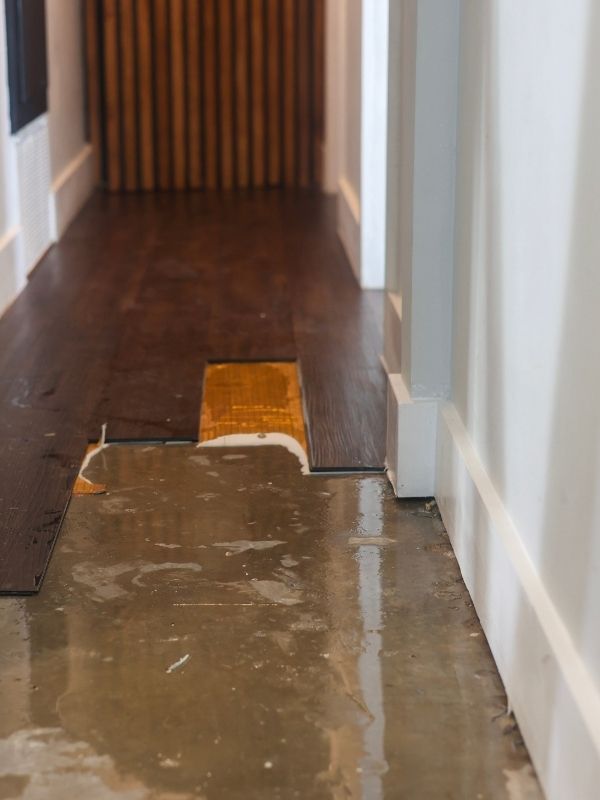
- Wet floors: An area of the floor is wet without an obvious source.
- Wet or soggy carpets: Parts of a carpet are continuously damp without an obvious source of water.
Water Pools Around a Home’s Foundation
- Water is seen around a home’s foundation: Water accumulates around the exterior of a home by the foundation without a clear source, such as a sprinkler or rain runoff.
Mold and Mildew Occur
Please note that mold and mildew can cause health problems.
- Visual signs: Mold and mildew may be seen in numerous places, such as walls, floors, or baseboards, and can have a variety of colors, such as black and green.
- The smell of mold and mildew: You may be able to smell mold or mildew even if it isn’t visible. It may have a musty smell.
Low Water Pressure
If you encounter a sudden drop in water pressure that cannot be explained, it may be caused by a leak, such as a slab leak.
Signs of Low Water Pressure
- Weak water flow: Encountering weak water flow from a shower or faucet, or other water source that previously had good water pressure, indicates an issue.
- Inconsistent water pressure: One sign of an issue is when the pressure varies significantly when other water sources aren’t being used.
Your Foundation Moves or Has Cracks
The water from a slab leak can damage or move your home’s foundation. As water leaves the pipe, it may cause soil to expand or contract, and can cause the foundation to settle unevenly.
Signs of foundation issues can be seen in a variety of places. The following are a few ways to look for them.
Signs of Foundation Issues Outside the Home
- Cracks on the foundation or outside walls: You can check outside your house for cracks on the foundation or walls of your home.
Signs of Foundation Issues Inside the Home
- Cracks on inside walls: Cracks on the inside of walls can indicate a foundation leak, particularly if these have a stair-step or vertical look.
- Problems with window or door frames: Foundation issues may cause doors or windows to not close correctly or have gaps.
- Uneven Floors: Floors may dip, sag, or be irregularly shaped. Tile or vinyl floors may warp or buckle.
- Cracks on the floor: A tiled floor may develop cracks.
Telling the Difference Between Small Fluctuations and Major Drops in Water Pressure
Some drops in water pressure may be due to regular occurrences, while others may result from a more severe problem.
Small Fluctuations
- Issues during peak usage times: Water pressure may drop slightly during parts of the day when it is in high demand, like the early morning or evening.
- Occasional interruptions: Local maintenance work or the use of water-using appliances such as dishwashers may cause occasional decreases in water pressure.
Major Drops
- Constant lack of pressure: Constant weak water pressure that doesn’t get better as time goes by is a sign of trouble.
- Several fixtures have low pressure: A sign of more significant trouble is when low pressure affects fixtures in different parts of your property.
Troubleshooting Other Reasons for Low Water Pressure
It’s a good idea to investigate common causes of low-water pressure before assuming the problem is due to a slab leak. The following are low water pressure issues you may encounter and potential solutions.
Clogged Showerheads or Aerators
Sign: Low flow only occurs with one shower head or water tap.
Potential Solution: Remove the shower head or aerator and clean out the scale and sediment that has built up.
Municipal Water Supply Problems
Sign: Your neighbors are also experiencing low water pressure.
Potential Solution: Reach out to the local water department to inquire if the low water pressure is related to a supply issue.
Malfunctioning Pressure Regulator
Sign: Suddenly encountering unexpectedly low water pressure throughout your house.
Potential Solution: A plumber should inspect the pressure regulator and replace it if needed.
Corroded or Aging Pipes
Sign: Encountering discolored water or a gradual decrease in water pressure.
Potential Solution: A plumbing professional will need to inspect the pipes and replace them if necessary.
What to Do if You Have a Slab Leak
Given the nature of slab leaks and foundation-related pipe issues, a professional plumber will need to handle them. It is NOT a DIY project.
If you believe you have a slab leak or foundation-related pipe issue, you can take action by following these steps.
Step 1. Inspect the issue: If you believe you have a slab leak or a foundation-related pipe issue, you’ll want to take action. In the event that you aren’t able to confirm a slab leak or pipe-related issue, but still believe something is wrong, it is a good idea to be proactive and take action by contacting a plumbing professional.
Step 2. Shut the water off if possible: If you are able, shut off your home’s water supply. This can help reduce water damage.
Step 3. Contact a Plumber and Your Insurance Company: Detecting and repairing a slab leak requires highly specialised skills. You’ll need a professional plumber to handle the problem. Contact a plumber who deals with slab and foundation leak detection to handle the issue. You’ll be able to discuss repair options with the plumbing contractor.
Your insurance company may help cover some costs associated with repairs, depending on your coverage. It is important to contact them early on in the process.
Contact us for Professional Slab Leak and Foundation-Related Pipe Issue Services
If you believe you have slab leaks or foundation-related pipe issues, don’t wait for the problem to escalate. Let the professionals at McKinney, Texas-based Bewley Plumbing handle your plumbing issues the right way. Be sure to ask about our military, teacher, and senior citizen discounts. We look forward to working with you.
Contact us to schedule a service appointment.